
How Architectural Design Impacts Decarbonization
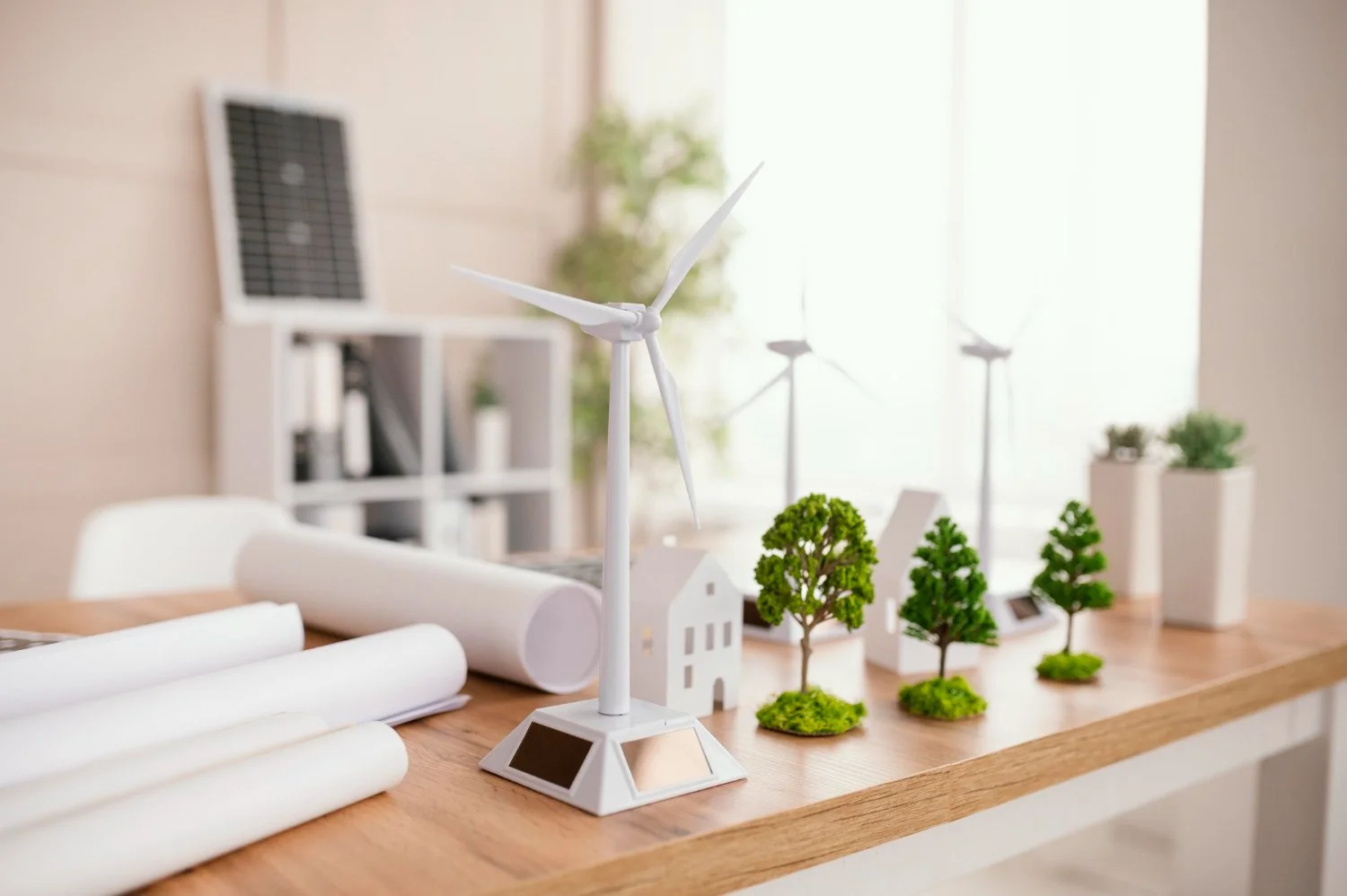
Decarbonization has become one of the biggest priorities in the built environment. Buildings contribute nearly 40% of global carbon emissions, split between operational carbon (energy used during a building’s life) and embodied carbon (emissions from materials, construction, transport, and manufacturing).
What’s often overlooked is this simple truth: architectural design sits at the center of both. The earliest design decisions determine how much energy a building will consume, how carbon-intensive its materials will be, and how people will use and interact with the space for years to come.
This blog breaks down exactly how design influences decarbonization and what architects, developers, and homeowners should understand when planning any project.
Understanding Carbon in Buildings
Buildings contribute to carbon emissions in two primary ways. To design for decarbonization, it’s crucial to understand both operational carbon and embodied carbon, as well as how architectural decisions directly influence each throughout a building’s lifespan.
1. Operational Carbon
Operational carbon refers to the emissions produced from the day-to-day energy a building consumes once it’s occupied. This category typically represents the largest share of a building’s total carbon output, especially in older or poorly designed structures.
Operational carbon is generated from:
Heating and cooling systems
Inefficient HVAC systems, poor insulation, and thermal bridging lead to high energy use. Architectural design significantly influences a building’s ability to retain heat in winter and stay cool in summer.Mechanical ventilation
Systems that supply fresh air and regulate indoor air quality can consume significant electricity, particularly in airtight modern buildings. Design choices like natural ventilation pathways and operable windows can reduce dependence on mechanical systems.Hot water systems
Domestic hot water demand, combined with inefficient heaters or long pipe runs, increases ongoing energy use. Space planning and efficient equipment selection affect this significantly.Lighting and plug loads
Lighting represents a substantial portion of electrical consumption. The amount of natural light a building receives depends on its orientation, window placement, and shading strategies, meaning architects influence lighting energy from the earliest design stages.
How design impacts operational carbon:
Architectural design determines energy demand before mechanical systems are even selected. Orientation, massing, shading, window-to-wall ratio, insulation levels, and passive ventilation strategies all combine to reduce operational carbon and improve long-term performance.

2. Embodied Carbon
Embodied carbon includes all emissions associated with the materials and construction processes required to create and maintain a building. Unlike operational carbon, which accumulates over decades, embodied carbon is "front-loaded," meaning it is released before the building is even used.
Embodied carbon comes from:
Material extraction
Raw materials like limestone (for cement), iron ore (for steel), and wood all have varying carbon footprints depending on how they are extracted and processed.Manufacturing
Transforming raw materials into products like concrete, insulation, structural steel, or glass involves significant energy consumption. Material selection directly influences total embodied carbon.Transportation
Materials transported long distances, especially heavy ones, increase carbon output. Local sourcing and lightweight alternatives help reduce emissions.Construction processes
On-site activities such as machinery use, fuel consumption, and waste generation all contribute to embodied emissions.Maintenance, renovation, and repairs
Every future material replacement or upgrade also carries carbon costs. Durable, adaptable design reduces long-term embodied carbon.End-of-life impacts
Demolition, waste processing, recycling, or landfilling materials create additional emissions. Designing for deconstruction can significantly lower this footprint.
How design impacts embodied carbon:
Architects influence embodied carbon through structural systems, material choices, sourcing strategies, construction methods, and the adaptability of a building over time. Selecting low-carbon materials, optimizing structural efficiency, and designing for longevity can reduce embodied emissions dramatically.
Why Both Matter
Operational and embodied carbon are deeply interconnected. A carbon-conscious architecture strategy evaluates:
How much carbon is required to build the structure?
How much carbon will it emit during operation?
How long will the building last, and how adaptable will it be?
What happens at the end of its lifecycle?
Decarbonization in architecture demands a full-lifecycle mindset—ensuring that decisions made during design reduce emissions not only today, but across decades of use.
The Impact of Early-Stage Architectural Decisions
Decarbonization begins long before materials are selected or systems are engineered. The earliest architectural decisions—often made during concept development and schematic design—shape the building’s carbon footprint more than any late-stage intervention. These foundational choices influence energy demand, material quantities, site impact, and long-term adaptability.
Why Early Decisions Matter
Early choices determine the building’s orientation, form, massing, and environmental response, which together set the baseline for both operational and embodied carbon.
Once core design parameters are locked in, opportunities for carbon reduction become increasingly limited.
Decisions made during concept design influence every downstream choice: HVAC size, insulation needs, structural system, glazing ratios, material volumes, and long-term maintenance demands.
In other words, early-stage design is where the largest carbon savings are created.
Key Early Decisions That Shape Carbon Performance
1. Building Orientation
Positioning a building correctly on its site is one of the most powerful low-carbon design strategies.
How orientation impacts carbon:
Maximizes passive solar gain in winter and reduces overheating in summer
Enhances natural daylighting, reducing dependence on artificial lighting
Enables natural ventilation paths
Reduces the load on mechanical heating and cooling systems
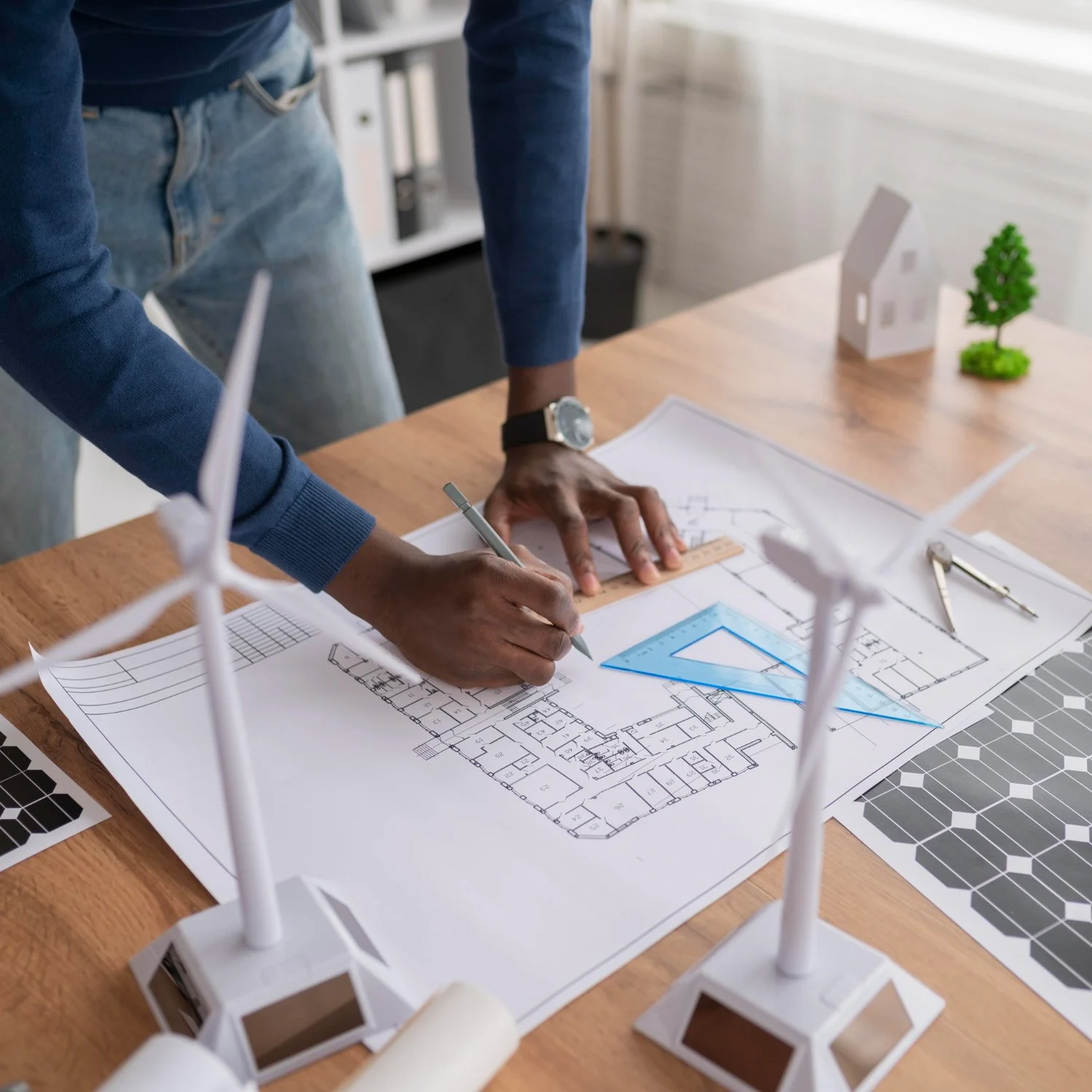
Architects use sun-path diagrams, climate data, and seasonal shading analysis to align the building for optimal performance.
2. Form and Massing
The size, shape, and volume of a building significantly affect both operational and embodied carbon.
Low-carbon design considerations include:
Compact forms reduce heat loss and require fewer materials
Balanced surface-to-volume ratios improve thermal efficiency
Simple massing minimizes thermal bridging and construction complexity
Strategic volume distribution supports natural ventilation and daylight penetration
Efficient massing reduces the need for oversized mechanical systems—and lowers carbon throughout the structure’s lifespan.
3. Site Analysis
A thorough understanding of the site informs climate-responsive, carbon-efficient design.
Key site factors that influence emissions:
Wind patterns: Enable natural cross-ventilation and reduce mechanical cooling
Sun exposure and shading: Informs window placement, shading devices, and glazing selection
Slope and topography: Affects foundation design, drainage strategies, and excavation requirements
Vegetation: Provides opportunities for shading, stormwater control, and microclimate optimization
Drainage and water movement: Reduces the need for energy-intensive mechanical solutions
By responding intelligently to site conditions, architects can significantly reduce operational demand from day one.
4. Material and Structural Approach
Material decisions made early in the design process determine a building’s embodied carbon profile.
Low-carbon structural strategies include:
Selecting low-carbon concrete, recycled steel, or mass timber
Reducing over-specification by optimizing structural spans and loads
Choosing locally sourced materials to reduce transportation emissions
Designing for modularity to minimize waste
Prioritizing materials with Environmental Product Declarations (EPDs)
Choosing the right structural system early ensures that embodied carbon reductions are built into the project—not added as an afterthought.
5. Long-Term Flexibility and Adaptability
Buildings designed for adaptability have significantly lower long-term carbon impacts.
Strategies for long-term flexibility:
Incorporating multi-use spaces that can evolve with changing needs
Designing flexible layouts that avoid future demolition or reconstruction
Using non-load-bearing interior walls for easy reconfiguration
Planning for future technologies or performance upgrades
Ensuring materials can be repaired, reused, or recycled at the end of life
Adaptable design extends the building’s lifecycle and prevents carbon-intensive retrofits.
Why These Early Choices Matter for Decarbonization
By embedding sustainability during early-stage design, architects can:
Reduce energy demand before adding mechanical systems
Lower material quantities through efficient structures
Enhance performance with minimal added cost
Improve resilience and future-proof the building
Minimize long-term operational and maintenance emissions
These decisions become the foundation for a truly low-carbon project. Once the design progresses, revising orientation, massing, or structural systems becomes costly or impossible—making early action essential.
Reducing Operational Carbon Through Design
Operational carbon can be reduced significantly through architectural strategies alone—before mechanical systems are added.
Passive Design Strategies
Passive systems reduce energy use by using natural forces rather than mechanical equipment.
Examples include:
Optimized natural daylighting
Cross-ventilation
Thermal mass to regulate temperature
Strategic shading and overhangs
Proper insulation and airtightness
High-Performance Building Envelope
A well-designed envelope lowers energy loads and improves comfort:
Continuous insulation
Airtight construction
High-performance windows
Reduced thermal bridging
Smart façade systems
Daylighting and Ventilation
Thoughtful design reduces reliance on electricity:
Window placement aligned with the sun path
Light wells and clerestories
Operable windows to enhance airflow
Integration of Efficient Systems
Even with passive design, mechanical systems matter:
High-efficiency HVAC equipment
Smart controls and automated systems
Efficient lighting systems
Renewable Energy Readiness
Design choices can prepare buildings for future energy systems:
Solar-ready rooftops
Battery storage infrastructure
Orientation optimized for PV performance
When architecture reduces the energy demand, mechanical systems can be smaller, cheaper, and more efficient.
Minimizing Embodied Carbon Through Material Choices
Embodied carbon is becoming a major focus because it represents emissions that occur before a building is occupied.
Low-Carbon Materials
Choosing materials with reduced environmental impact can significantly lower the building’s carbon footprint:
Low-carbon concrete mixes
Recycled steel
Engineered timber
Reclaimed materials
Natural materials with low processing requirements
Efficient Structural Design
Architects influence the amount of material used by:
Optimizing spans
Reducing unnecessary mass
Coordinating early with structural engineers
Avoiding over-designed systems
Longevity and Adaptability
Buildings that last longer emit fewer emissions over time:
Modular layouts
Easy-to-maintain materials
Space designed for multiple future uses
Long-term durability is one of the most effective decarbonization strategies.
Sustainable Construction Methods
Construction is one of the most carbon-intensive phases of a building’s life. The energy used on-site, the materials consumed, and the waste generated all contribute to embodied carbon. Sustainable construction methods significantly reduce these impacts—and many of these strategies are only possible when architects design with them in mind from the start.
Why Construction Methods Matter for Decarbonization
A large portion of embodied carbon is emitted before a building is even occupied.
On-site practices influence emissions through fuel consumption, machinery use, material waste, and transportation.
Thoughtful design enables contractors to build efficiently, avoid rework, and support low-carbon construction workflows.
Sustainable construction doesn’t happen on-site alone—it begins with design decisions that guide how the building will be assembled.
Key Sustainable Construction Methods
1. Prefabrication
Prefabrication involves manufacturing building components—such as wall panels, floor systems, or façade elements—in controlled factory environments before delivering them to the site.
How prefabrication reduces carbon:
Minimizes waste: Factory precision reduces offcuts and material inefficiencies.
Improves quality: Controlled conditions reduce errors, which prevents carbon-intensive rework.
Reduces site disturbance: Less time spent on-site lowers emissions from machinery and temporary setups.
Supports safer, faster construction: Shorter timelines reduce daily energy consumption from on-site operations.
Architectural design determines whether prefabrication is possible through modular planning and standardized dimensions.
2. Modular Construction
Modular construction builds entire volumetric units (e.g., rooms, sections of buildings) off-site, then assembles them on the site like building blocks.
Low-carbon benefits include:
Lower material use: Modules are engineered for efficiency, avoiding unnecessary structural redundancy.
Less construction waste: Factory environments optimize every cut and assembly.
Cleaner and faster construction: Fewer on-site activities reduce noise, dust, emissions, and fuel consumption.
Repeatable design efficiencies: Standardized modules reduce the carbon impact of unique, custom builds.
Architects can design using modular grid systems and repeatable units to make modular construction viable.

3. Local Sourcing
Choosing materials sourced from regional suppliers significantly reduces carbon emissions associated with transportation.
Key advantages of local sourcing:
Lower transportation emissions: Shorter delivery distances cut fuel consumption.
Faster supply chains: Reduce delays and avoid carbon-heavy express shipping.
Support for local industries: Strengthens the regional economy and encourages sustainable manufacturing.
Better climate compatibility: Local materials are typically well-suited to local environmental conditions.
Architectural specifications play a direct role—materials chosen early in design determine sourcing options later.
4. On-Site Waste Management
Construction sites often generate large volumes of waste that end up in landfills, where materials continue producing carbon through decomposition or processing.
Sustainable waste management strategies include:
Sorting and recycling: Separating metal, wood, drywall, and concrete reduces landfill reliance.
Salvaging reusable materials: Keeps valuable resources in circulation and reduces new material demand.
Efficient material ordering: Prevents overbuying and reduces excess stock.
Reusing formwork and temporary structures: Minimizes single-use construction items.
Architects can support this by specifying recyclable materials, designing for standard material dimensions, and minimizing unnecessary complexity.
The Role of Architecture in Enabling Sustainable Construction
Architectural design influences construction feasibility long before workers arrive on site. Thoughtful early decisions can:
Simplify building geometry to reduce waste
Enable prefabricated components through modular planning
Specify low-carbon, locally available materials
Reduce excavation, structural loads, and construction durations
Plan for efficient staging, logistics, and site access
By coordinating design with sustainable construction strategies, architects create conditions where builders can minimize emissions without compromising performance or quality.
Digital Tools That Support Decarbonization
Modern architectural practice increasingly depends on digital tools to make informed, data-driven decisions. These tools help architects predict a building’s environmental impact, evaluate different design strategies, and optimize performance long before construction begins. By integrating digital analysis early, teams can significantly reduce both operational and embodied carbon.
Why Digital Tools Matter
They turn assumptions into measurable insights.
They allow design teams to compare alternatives based on carbon impact—not just aesthetics or cost.
They support collaboration among architects, engineers, contractors, and sustainability consultants.
They help avoid carbon-intensive decisions that might otherwise go unnoticed until later stages.
Digital tools transform decarbonization from a conceptual goal into a quantifiable, achievable design strategy.
Key Digital Tools Used in Low-Carbon Architecture
1. Energy Modeling
Energy modeling software analyzes how a building will use energy in real-world conditions.
What it helps architects understand:
Heating and cooling loads
Daylighting performance
Ventilation needs
Equipment and lighting energy use
How design choices (orientation, insulation, glazing) affect operational carbon
By testing options early—such as window placement, shading strategies, or envelope performance—architects can design buildings that inherently require less energy.
2. Embodied Carbon Calculators
Embodied carbon calculators assess emissions associated with materials, manufacturing processes, and construction activities.
These tools are used to:
Compare materials (e.g., steel vs. mass timber)
Evaluate the carbon impact of different structural systems
Analyze material quantities and optimize for lower emissions
Review Environmental Product Declarations (EPDs) for sourcing decisions
This makes it easier to select low-carbon materials with confidence, backed by measurable data.
3. Building Information Modeling (BIM)
BIM is a collaborative platform that integrates architectural, structural, mechanical, and construction data into a single digital model.
How BIM supports decarbonization:
Enables precise material takeoffs to minimize waste
Helps coordinate systems efficiently, avoiding carbon-heavy rework
Supports lifecycle planning, including maintenance and end-of-life considerations
Integrates energy models and carbon data directly into the design process
With BIM, teams can design buildings that are efficient, buildable, and optimized for low-carbon outcomes.
4. Scenario Simulations
Simulation tools allow architects to test multiple design strategies to find the best balance of performance, cost, and carbon reduction.
Simulations can explore:
How different forms and orientations affect energy use
The impact of improving insulation or glazing
Renewable energy potential
Material substitution scenarios
Whole-building carbon impacts across a 60+ year lifecycle
These simulations help architects make smarter decisions before materials are ordered or construction begins.
The Value of Digital Tools in Decarbonization
Digital tools make carbon analysis accessible and actionable. They allow teams to:
Identify hidden inefficiencies
Optimize design early when changes are most impactful
Reduce uncertainty in decision-making
Deliver buildings that perform better over time
By integrating these tools into standard workflows, architects can ensure that decarbonization is not an afterthought, but a fundamental part of the design process.
Designing for Low-Carbon Human Behavior
The way people use a building affects its carbon footprint just as much as its materials or systems.
Design can promote low-carbon habits by:
Highlighting staircases to encourage walking
Providing secure bike storage
Designing comfortable, daylight-filled workspaces
Allocating space for recycling and waste sorting
Integrating EV charging stations
Creating walkable site layouts
Architecture can shape behavior toward sustainability without requiring user effort.
The Role of Collaboration in Design-Led Decarbonization

Decarbonization requires alignment across the entire value chain.
Effective collaboration includes:
Early coordination between architects, engineers, and contractors
Procurement practices that prioritize low-carbon materials
Clear sustainability goals defined at project kickoff
Understanding regulatory and environmental standards
Encouraging clients to view sustainability as long-term value, not an added cost
A unified team ensures that carbon-reduction strategies are implemented consistently from design through construction.
Conclusion
Architectural design is a powerful tool for decarbonizing the built environment. Every decision—from site planning and building orientation to material selection and system integration—shapes the carbon footprint of a structure for generations. By adopting carbon-conscious design, architects can create buildings that perform better, last longer, cost less to operate, and contribute positively to a sustainable future.
Decarbonization is not a single strategy; it is a comprehensive design mindset. With thoughtful planning, innovative materials, and strong collaboration, architecture can lead the way toward a low-carbon future.